
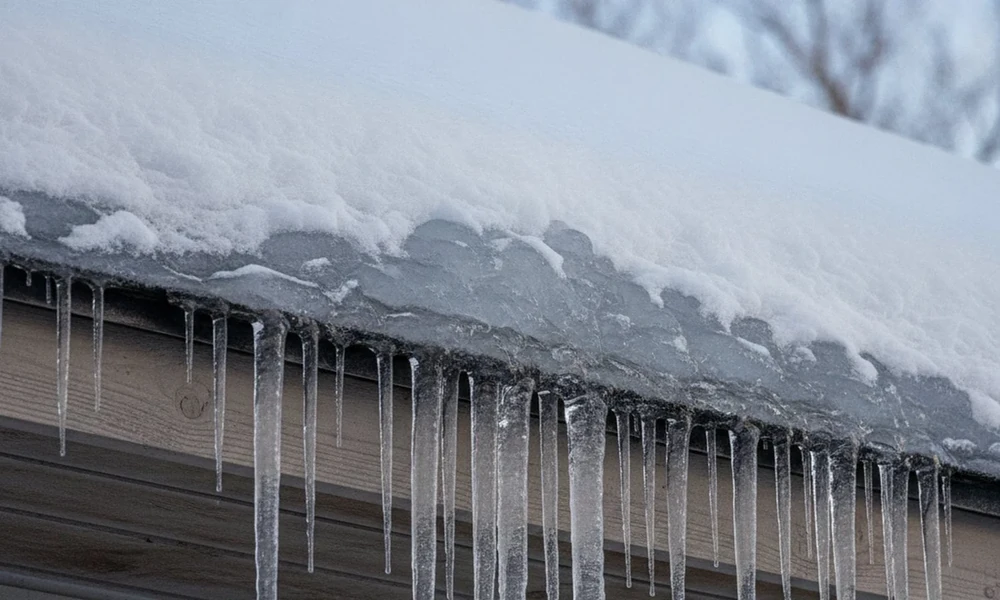

Anyone who has lived through a Central New York winter knows the sound. A soft drip in the middle of a frozen afternoon, then a brown ring slowly spreading across a bedroom ceiling. Most people look out the window, spot a thick ridge of ice along the roof edge, and decide the gutter is to blame. The real story usually starts much higher, inside the attic, and only finishes at the eave.
Snowy regions like Syracuse, Manlius and Hamilton put roof edges through dozens of freeze and thaw cycles every season, and local installers see the damage up close. Homeowners comparing seamless gutters, gutter covers and heated edge protection often turn to long established regional specialists such as Barry Best LLC, which has spent more than 27 years fitting homes in the area with custom seamless gutters, Gutter Helmet covers and Helmet Heat cable.
Understanding the full chain matters because the right fix depends on which link is weakest. Spend money on the wrong piece, and next February looks exactly like this one.
Warm Air Escapes Long Before the Snow Melts
Ice dams form when the upper part of the roof deck is warm enough to melt snow while the overhang stays below freezing. Meltwater trickles down underneath the snow blanket, reaches the cold edge and refreezes. Each cycle adds another layer. Eventually a ridge of ice traps a pool of water behind it.
That pooled water is the real threat. Shingles are built to shed water downhill. They were never meant to hold back a puddle, so the water creeps sideways and upward under the tabs until it finds a nail hole or seam.
Engineers at North Dakota State University Extension point to heat leaking from the living space into the attic as a major driver of rooftop snowmelt. They also note that insulation pushed too far toward the eaves can block airflow from soffit vents, which is why baffles matter. Common leak points include recessed lights, bathroom fans, plumbing stacks, attic hatches and chimney chases. None of them looks dramatic on its own. Together they can warm a roof deck enough to start the whole cycle.
The Overhang Stays Cold by Design
Roof overhangs sit outside the heated part of the house. Nothing warms them from below, so they track the outdoor temperature closely. This is simple geometry, not a construction flaw.
It also explains why the gutter ends up in the worst possible spot during winter. It sits exactly where meltwater arrives just as it is about to freeze again.
Certain roof features make the problem worse. The Building and Construction Technology program at UMass Amherst notes that ice dams often form below skylights, since those assemblies lose more heat than the roof around them. Dormers, cathedral ceilings and valleys where two slopes pour melt into one channel behave the same way.
Can a Gutter Actually Stop an Ice Dam?
On its own, no gutter can prevent one. A gutter collects water and carries it away. What it can do is avoid making a bad situation worse.
A trough packed with wet autumn leaves freezes solid early in the season. That frozen mass effectively raises the roof edge and gives ice a head start. A sagging section holds standing water that turns into a block overnight. Overflow sheets down fascia and siding, glazes the walkway below and soaks the soil next to the foundation.
Snow country also asks a lot of gutter hardware. Ice is heavy, and a fully frozen run can carry far more weight than the summer downpour it was sized for. Hangers spaced closer together, a steady pitch toward each downspout and wider downspouts that resist clogging all lower the odds of a frozen gutter peeling away from the fascia board.
Fewer Seams Give Ice Fewer Places to Hide
Sectional gutters arrive in fixed lengths and get joined on the house. Every joint depends on sealant. Freeze and thaw cycles flex those joints again and again, and water that seeps into a tired seam expands when it freezes, prying the gap wider each time.
Seamless gutters are formed on site from a continuous coil and cut to match each roof run. Joints only appear at corners and downspout outlets. Fewer seams simply means fewer weak points for ice to exploit.
Size plays a role too. Five inch K style gutters are common on smaller homes. Six inch troughs handle the heavier runoff from large or steep roofs, and 3 by 4 inch downspouts pass slush and debris more easily than the narrower 2 by 3 inch kind.
Covers and Heat Cable Solve Different Problems
Gutter protection gets lumped together, but each piece handles a separate job:
- Gutter covers keep leaves, pine needles and seed pods out, so the trough stays open heading into winter instead of freezing around a clog.
- Heated cable run through the gutter and downspout keeps a melt channel open, giving trapped water a path off the roof edge.
- Attic air sealing, insulation and ventilation deal with the warmth that starts the melt in the first place.
The first two manage what happens at the edge. The third goes after the cause. Building scientists often caution that heat cable alone spends energy fighting a symptom, and that point is fair.
Still, plenty of homes have spots that resist an easy attic fix. Low slope porch roofs, north facing eaves that never see sunlight and complicated rooflines with tight valleys are good examples. For those areas, heated cable paired with covers that keep the channel clear can act as a practical safety net. The cable should be rated for roof and gutter use, plugged into a GFCI protected outlet and routed all the way down the downspout. A melt path that ends at a frozen downspout just relocates the ice dam a few feet.
Reading the Warning Signs Early
The roof usually hints at trouble before a ceiling stain appears. Long icicles clustered along one section, rather than evenly across the eave, suggest heat is escaping in that area. Snow vanishing from the upper roof while the lower edge stays buried on a frigid day tells the same story.
Inside, frost on the tips of roofing nails or on the underside of the sheathing during cold mornings points to warm, moist air reaching the attic. Outside, peeling soffit paint, water streaks on siding and a gutter line that dips between hangers all deserve a closer look before the heavy snow arrives.
Fall Work Pays Off in February
Late October and November offer the best window to prepare. Clearing gutters after the final leaves drop, confirming downspout extensions carry water well away from the foundation and checking that hangers sit tight against the fascia take an afternoon. A quick trip into the attic with a flashlight shows whether insulation has buried the soffit vents.
Once winter settles in, a long handled roof rake used from the ground can pull the first few feet of snow off the edge after a big storm. Chipping at ice with hammers or hatchets tends to damage shingles and gutters far more than it helps.
The most useful mindset is treating the roof, attic and gutters as one system. Heat control upstairs decides how much water reaches the edge, and a well built, well protected gutter decides what happens to it next. When both parts do their jobs, winter becomes something to watch from a warm window instead of something to mop up.







Leave a Comment